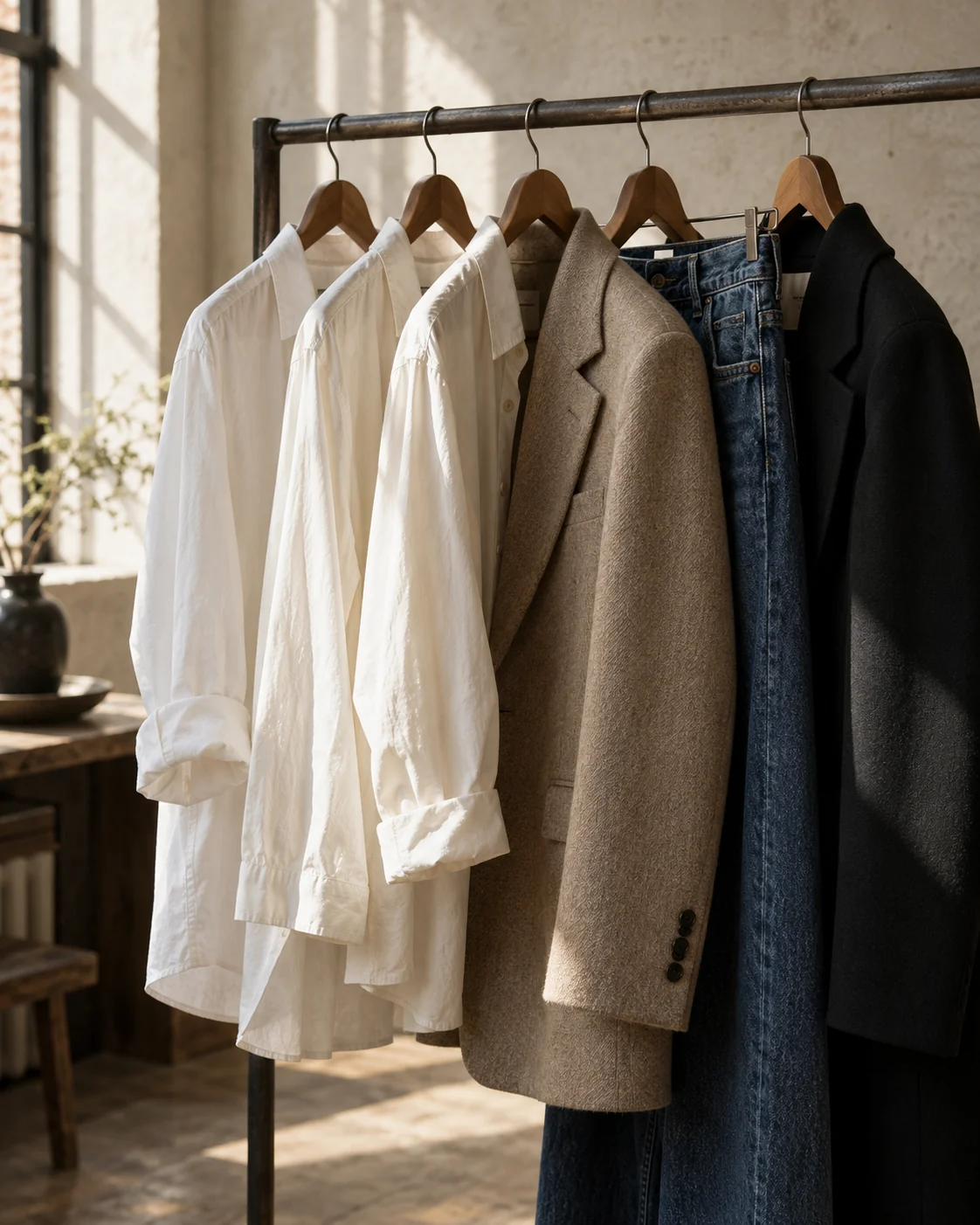
A full rail can still leave you wearing the same three things. Before clearing it out or ordering replacements, look at those three things. They may fit better, work with your shoes or simply be easier to wash. That is useful information.
Keep track for a week
Take a quick photograph of what you wear each day. Include the coat, bag and shoes. At the end of the week, note the pieces you reached for and the ones you put on, then took off. A shirt that needs ironing every morning may stay unworn even when you like the cut.
Compare that week with the clothes taking up the most space. If you walk to work in all weather, a coat that fits over a jumper may be more useful than another occasion jacket. Keep clothes for the life you have, with a little room for occasions you enjoy.
Try combinations before buying
Put your usual trousers on with three tops and the same pair of shoes. Add a jacket. If one combination nearly works, try changing the cuff, tucking the shirt or shortening the hem with pins. Sometimes the missing piece is an adjustment.
Write down gaps as specific problems: a layer that fits under this coat, or shoes that work with these trousers in the rain. A useful shopping list is short enough to remember in the changing room.
Give repairs a deadline
Keep a small bag for clothes that need a button, a hem or a trip to the cleaner. Book the work rather than leaving that bag under the bed. After a month, check whether the repaired pieces are back in use. You do not need to clear the whole wardrobe in one afternoon.