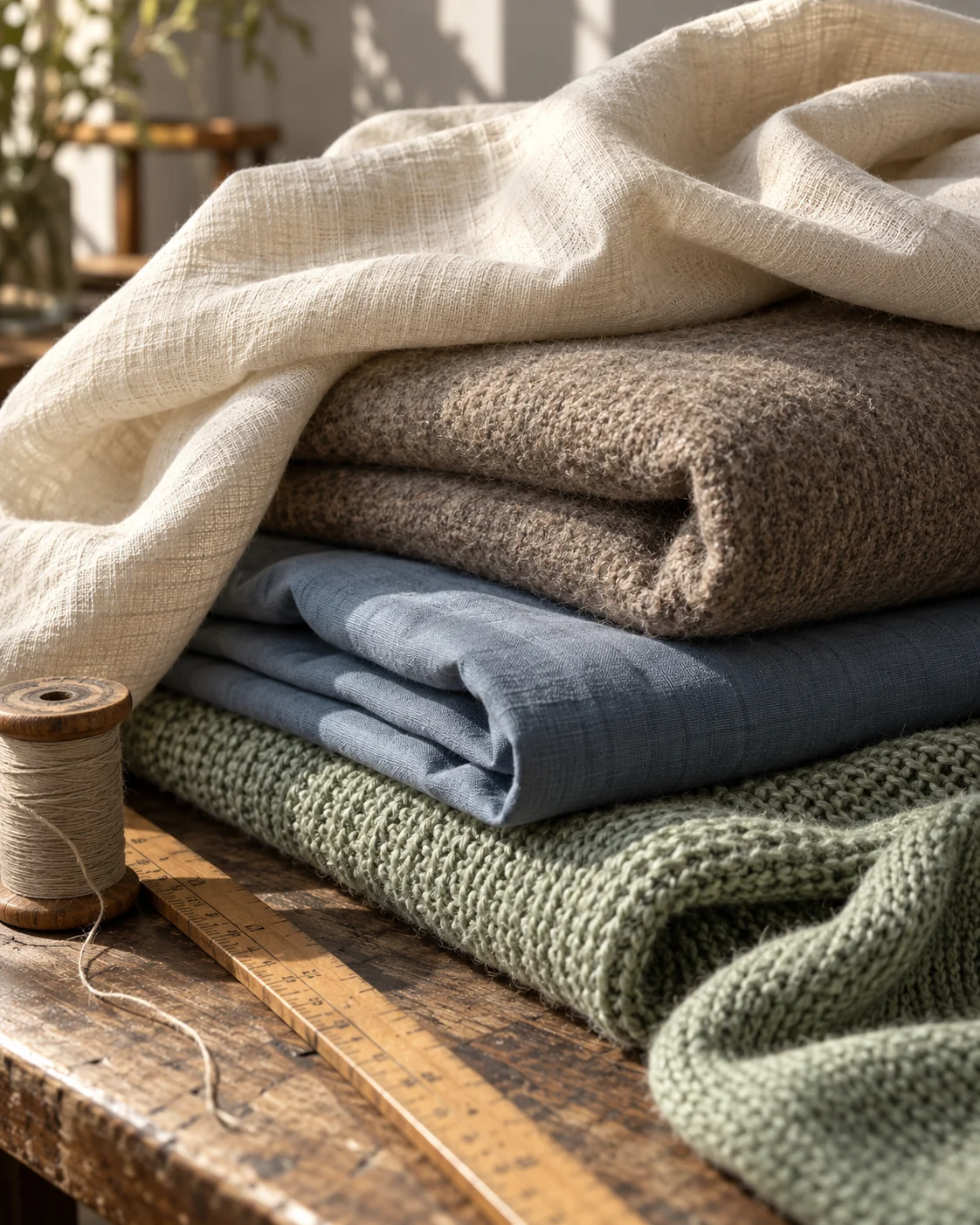
The fibre label tells you what a fabric contains. It does not tell you everything about its weight, weave or finish. That is why two shirts marked cotton can feel so different on the same day.
Look at how it hangs
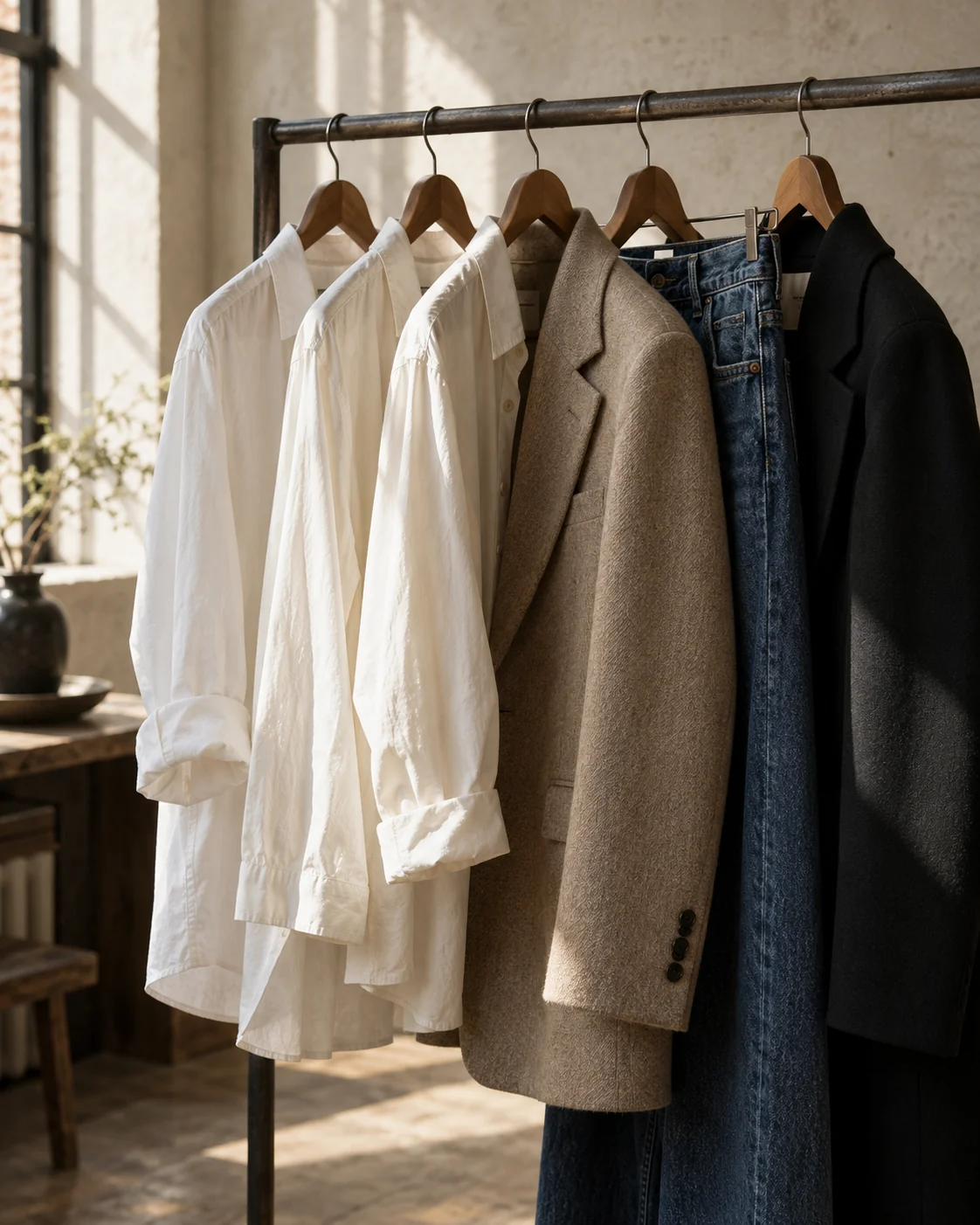
Hold the garment by its shoulders or waistband and let it hang. A crisp cloth holds its shape; a fluid one falls into folds. Try it on to see how that behaviour works at the knees, elbows and waist.
Consider where you will wear it. Heavy trousers may hang well but feel too warm on a crowded train. A light shirt may be comfortable in heat but need an extra layer if it is more transparent than you expected.
Check gently
Ask before handling delicate fabric in a shop. Lightly compress a small area and release it to see how readily it creases. Gently extend a knitted cuff and check whether it returns to shape. Do not pull hard or rub the surface to test it.
Creasing is not automatically a fault, and pilling alone cannot establish the quality of a knit. Look at the whole garment and ask about care. A fabric comb or shaver is not suitable for every surface.
Read the care label before buying
Decide whether the recommended washing, drying and cleaning fit your routine. If the label is unclear, ask the seller or a cleaner before treating it. Do not assume that a fibre name is a complete set of care instructions.
Store knitwear folded when hanging would stretch it. Let damp clothes dry fully before putting them away, and deal with a loose seam before it opens further.