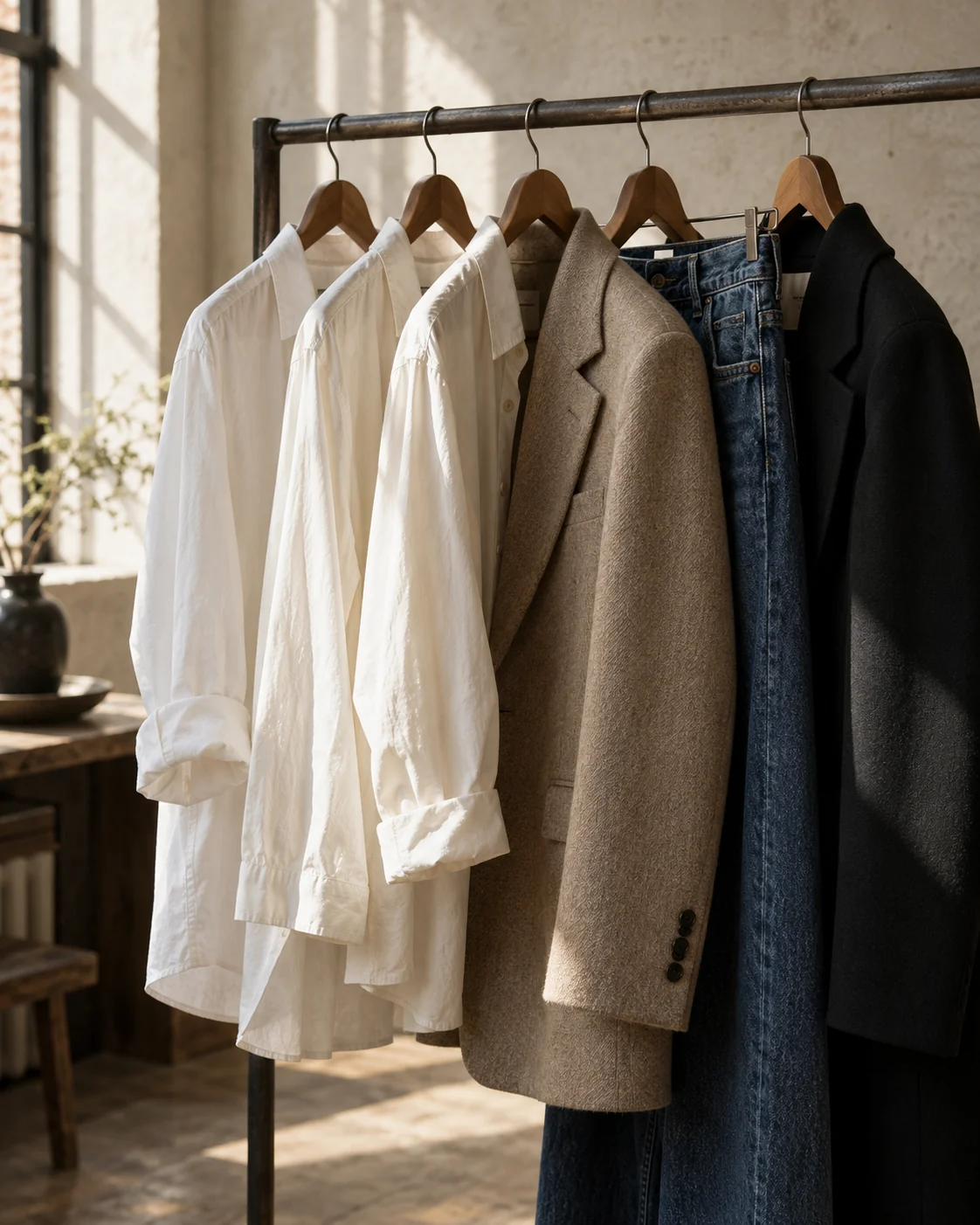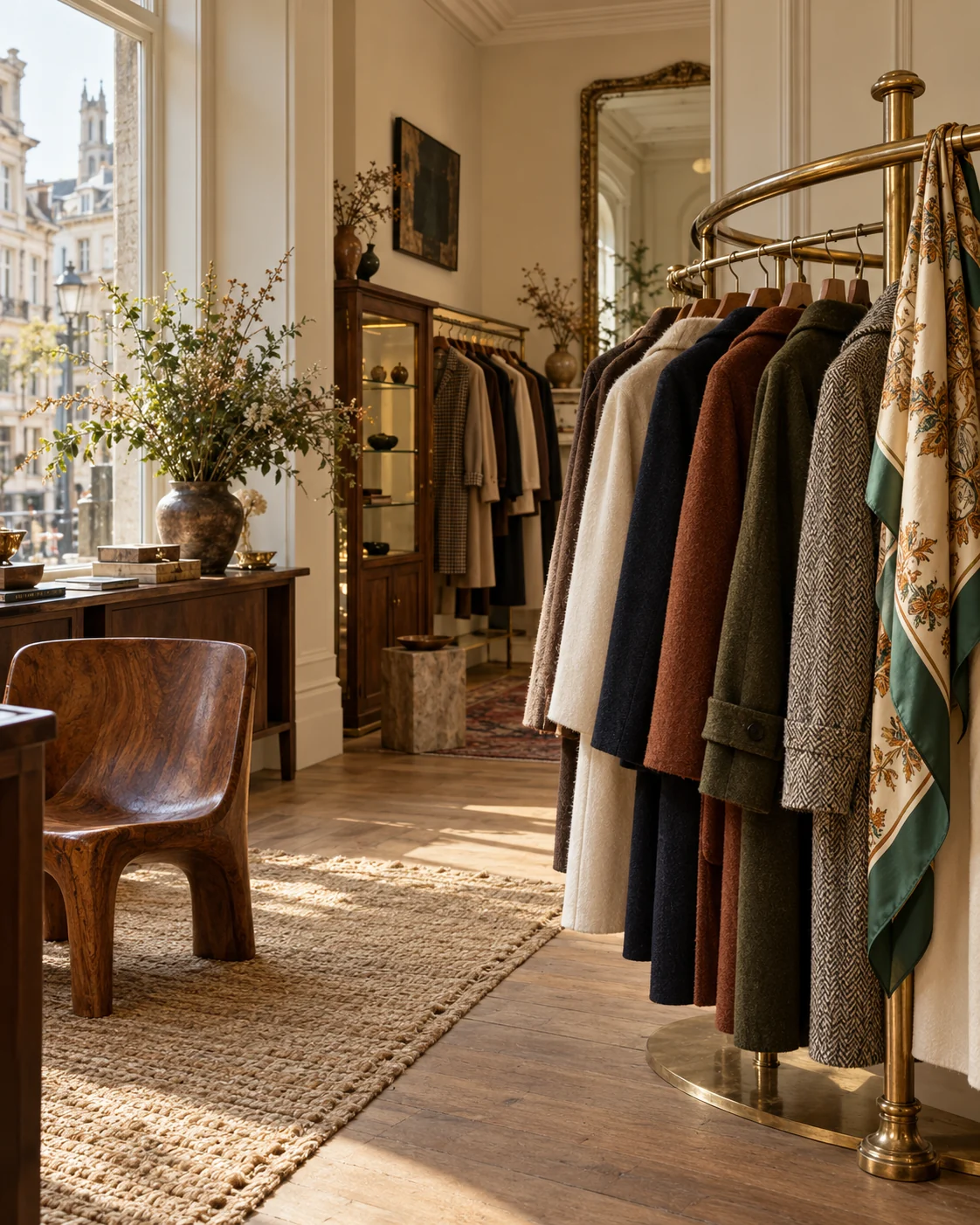
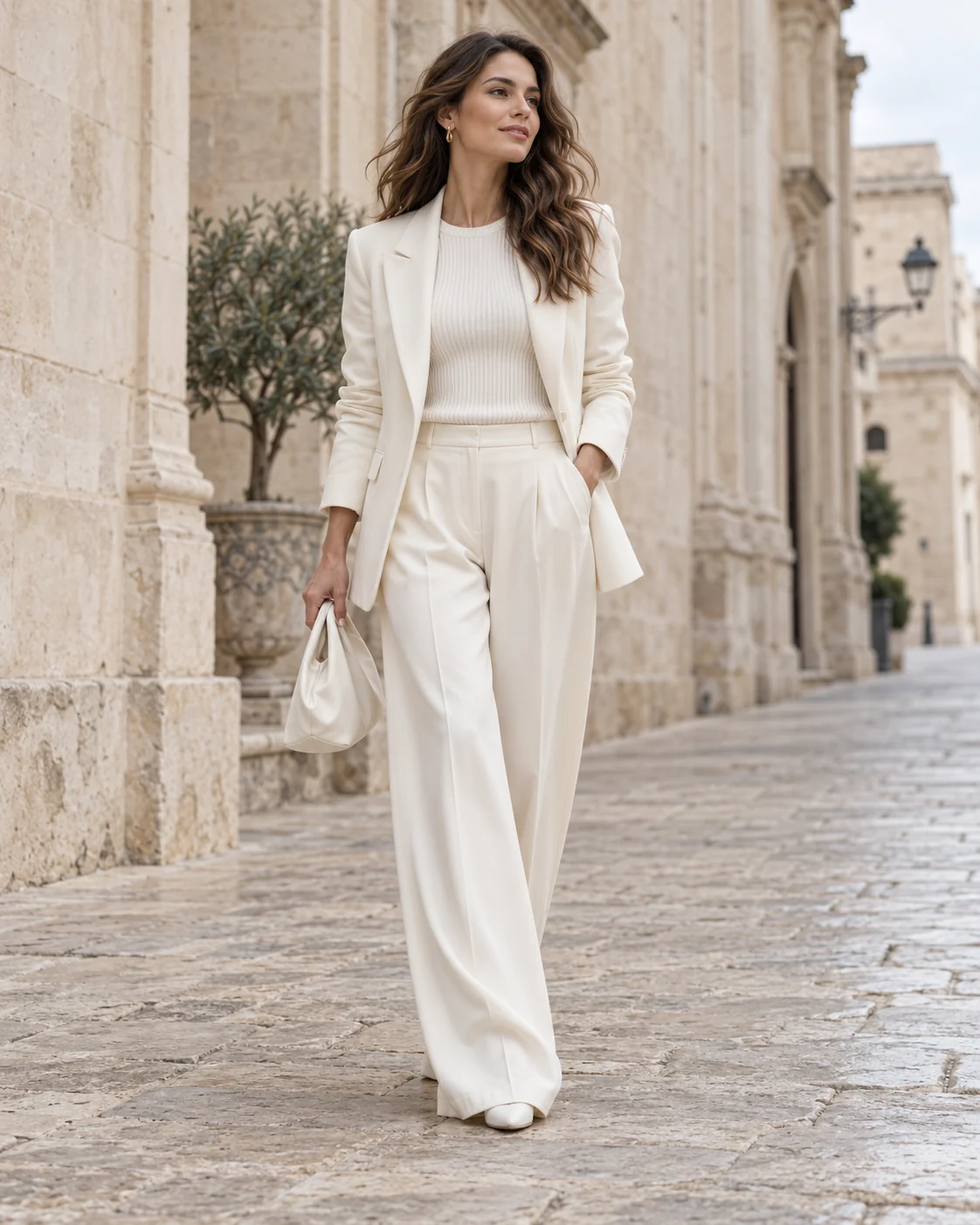
An outfit in one colour rarely consists of identical shades. An old navy jumper and new navy trousers may look close indoors and quite different outside. Put them together in daylight before deciding whether you like the difference.
Start with what is already there
Choose a colour that appears several times in your wardrobe. Lay out a top, trousers or skirt, and an outer layer. Add the shoes and bag you would actually use. Cream, grey and brown are easy starting points if you own them, but the same exercise works with green or burgundy.
If two nearly matching shades look accidental, try a more obvious difference. A pale knit over darker trousers can be easier to put together than two pieces that almost match.
Separate the textures
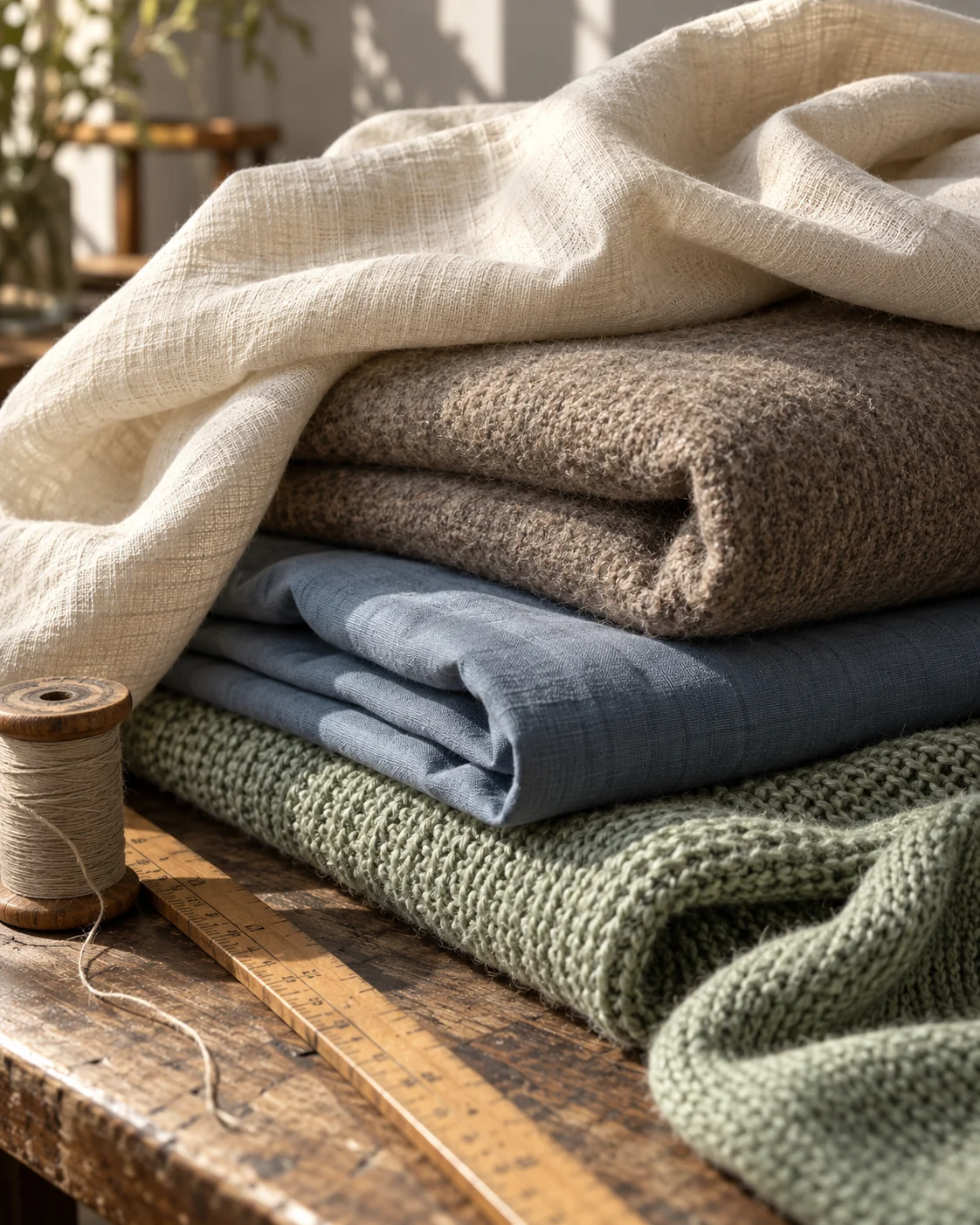
Try a smooth shirt under a coarse knit, or a matte jacket over a slightly glossy fabric. Texture makes the layers visible even when the colours are close. Check the combination in motion as well as standing still.
Then look at length. A shorter jacket shows more of a high waistband; a long coat changes the outline again. Adjust a cuff or tuck before assuming that you need a different garment.
Decide where to break the colour
Try a dark shoe or belt with a pale outfit. Compare that with accessories close to the main colour. Neither version needs to follow a rule; keep the one you would feel comfortable wearing out.
Take a photograph of the combination you choose. The next time you need to get dressed quickly, you have a complete outfit to return to.