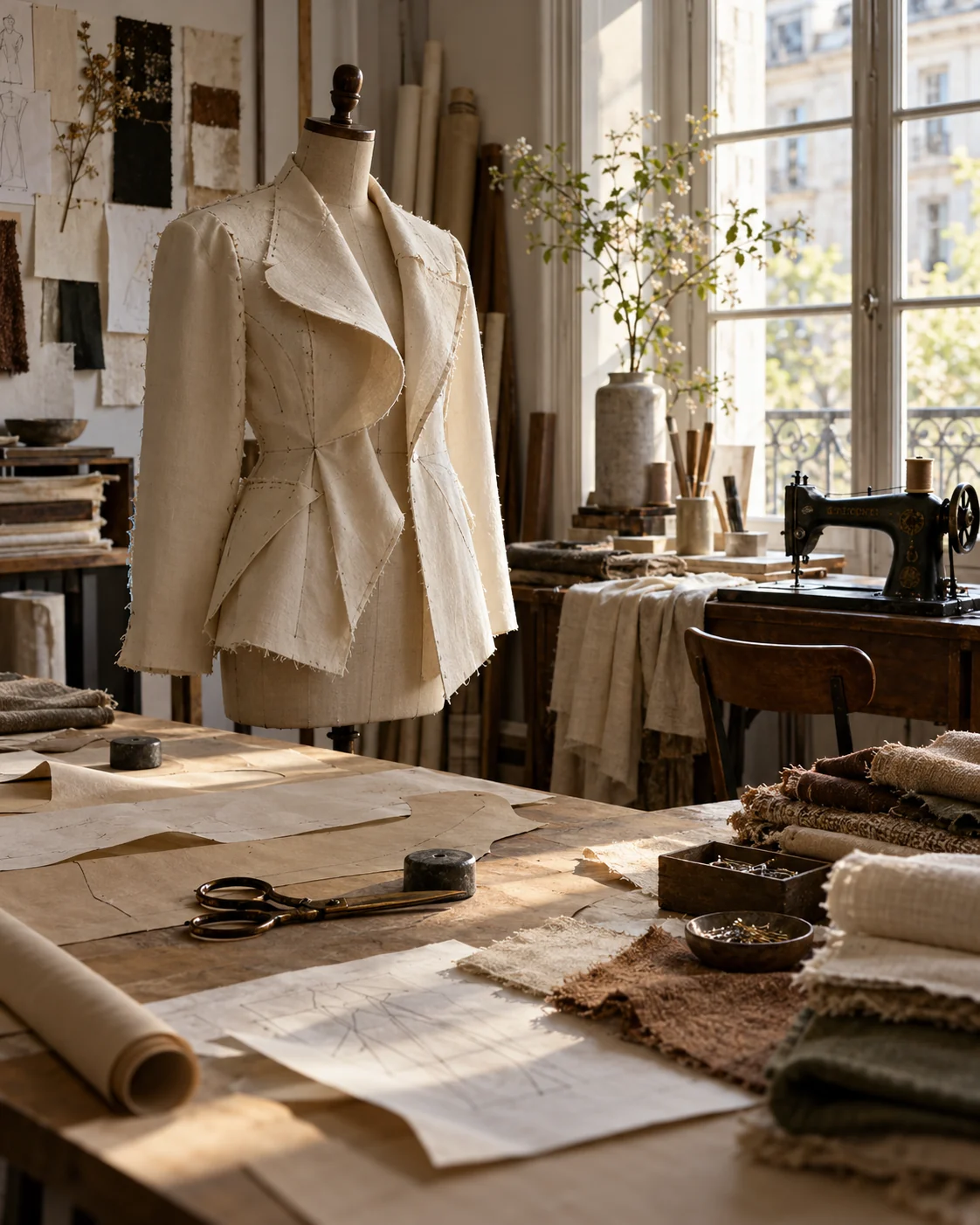
At an open studio, the unfinished work is often the most useful thing to look at. Paper patterns, pinned samples and rejected fabrics show the decisions that disappear inside a finished garment. Ask which pieces you may handle before picking anything up.
Ask what changed
A designer may have moved a pocket, recut a sleeve or changed the cloth after trying a sample. Ask what prompted the change. A coat that needed room for a jumper or a shirt designed for cycling gives you something concrete to assess.
Try the finished piece if there is a sample in your size. Discuss how it moves and what would be different in your order. Photographs of another customer are useful, but they cannot confirm your fit.
Get the order details in writing
For made-to-order work, confirm the measurements, fabric, price, payment schedule and expected completion date. Ask what happens if the fit needs adjusting, and check the cancellation and returns terms before paying.
Small production does not by itself establish an environmental claim. If materials or manufacturing matter to your decision, ask where the fabric comes from and who makes the garment. Specific answers are more useful than a label such as slow fashion.
Ask about the years after the sale
Find out whether the studio offers repairs or keeps spare buttons and fabric. Confirm the likely cost and whether that service applies to older pieces. Keep the written care instructions with your order details.
An open studio is also a chance to learn without buying. Look, ask a few questions and respect the maker's working space. There is no need to place an order to justify the visit.